Small signs throughout the ITC grounds and Besant Hall provide brief descriptions of notable places and objects. Further information is available here.
The Labyrinth, the inward and outward journey
The inward and outward Journey can be taken literally: we need to alternate between being turned outward and turning inward. On the longest outer edge, you may feel as if you have lost your way to the centre, as if you are endlessly guided along the perimeter, unsure where the path will lead. When you reach the centre, the path you have taken is all around you. All experiences and adventures are past, but still within view. The centre is a place of silence and is also the turning point, where going inward transitions into going outward, into the world. It all depends on your own pace how long this journey will take you.
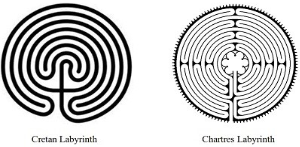
The labyrinth on the ITC is a condensed version of the famous labyrinth in the 12th-century cathedral of Chartres, France. Walking the Labyrinth symbolises the journey of life. Moving inward and outward reflects our path through life. We encounter our past experiences, but we keep circling towards the place of silence, the centre of the Labyrinth.
Guidelines for walking the labyrinth:
- First choose the theme of your journey.
- Focus all your senses on the present moment:
- Experience the sound of the wind, your heartbeat, the colours around you.
- Feel the ground you are standing on, feel your body, your breathing.
- Simply experience everything as it is. There is no need to change anything.
- Now enter the labyrinth from an inner place of calm.
For further information: https://www.theosophyforward.com/index.php/theosophy/612-the-theosophical-labyrinth.html